
AI Nobel Prize Discovery Within Year, Says Anthropic

Anthropic co-founder Jack Clark predicts AI will help achieve Nobel-winning discovery within 12 months, alongside other major technological breakthroughs.
Jack Clark, co-founder of the prominent AI safety company Anthropic, has made bold predictions about the trajectory of artificial intelligence development, describing what he characterizes as a "vertiginous sense of progress" in the field. His comments highlight both the remarkable capabilities emerging from cutting-edge AI systems and the profound societal changes that may accompany their advancement. Clark's projections paint a picture of rapid transformation across multiple sectors of the economy and scientific research.
According to Clark's timeline, a collaborative AI-human discovery capable of earning Nobel Prize recognition could materialize within the next 12 months. This prediction represents a significant milestone in the application of artificial intelligence to scientific research, suggesting that AI technology has reached a level of sophistication where it can contribute meaningfully to groundbreaking discoveries in fields such as medicine, physics, chemistry, or physiology. The notion that AI could play a pivotal role in research of such caliber underscores the transformative potential of these systems in accelerating human knowledge advancement.
Beyond scientific achievements, Clark outlined several other remarkable developments expected to unfold over the coming months and years. Within two years, according to his forecast, bipedal robots will begin providing practical assistance to tradespeople in various industries, potentially revolutionizing how manual labor and skilled trades are performed. These robots represent a significant engineering feat, combining advances in robotics, artificial intelligence, and machine learning to create machines capable of navigating human-designed spaces and performing complex physical tasks.

Clark also made bold assertions about the autonomous AI companies sector, predicting that businesses operated entirely by artificial intelligence systems could be generating millions of dollars in revenue within 18 months. This projection suggests a future where companies manage their own operations, make strategic decisions, and execute business functions without human intervention. Such developments would represent a fundamental shift in how organizations are structured and operated, with profound implications for employment, economic organization, and the role of human decision-making in business.
Perhaps most ambitiously, Clark predicted that by the end of 2028, AI systems would possess the capability to design their own successors. This self-improvement dynamic raises fascinating questions about the trajectory of artificial intelligence development and the potential for recursive enhancement, where each generation of AI becomes more capable at designing the next generation. Such capabilities could lead to exponential improvements in AI performance and functionality, fundamentally altering the pace of technological advancement.
The Anthropic co-founder's remarks come amid intense competition and rapid development in the AI sector, where companies are racing to achieve increasingly sophisticated capabilities. His predictions reflect his position within one of the leading organizations focused on AI safety and alignment, a company founded with the explicit mission of ensuring that artificial intelligence systems remain beneficial and controllable as they become more powerful. Clark's optimism about near-term breakthroughs is tempered by his acknowledgment of the substantial risks accompanying such rapid technological advancement.
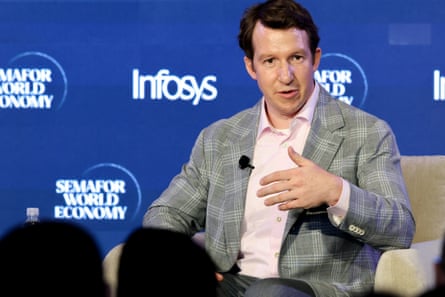
The discussion of risks is particularly significant given Anthropic's founding principles and mission. The organization emerged from concerns about the safety implications of increasingly powerful AI systems and the importance of developing techniques to ensure these systems remain aligned with human values and intentions. Clark's predictions, therefore, should be understood not as unqualified optimism but as observations made within the context of ongoing efforts to develop AI responsibly and safely.
Clark's vision of societal transformation reflects a broader consensus among AI researchers and technology leaders that the field stands at an inflection point. The capabilities demonstrated by recent large language models and multimodal AI systems have exceeded many earlier expectations, suggesting that some of Clark's predictions may be more realistic than they might have seemed just years ago. However, the track record of technological forecasting suggests that the exact timeline and nature of these developments may differ from current predictions.
The prediction regarding Nobel Prize-winning AI discoveries is particularly intriguing, as it speaks to the role artificial intelligence can play in advancing fundamental human knowledge. Scientific breakthroughs of Nobel Prize caliber typically represent major advances in understanding natural phenomena or developing new methodologies that have broad applicability. The notion that AI could contribute significantly to such discoveries suggests that these systems have developed reasoning capabilities and can process scientific information in ways that complement human scientific intuition and creativity.
The emergence of bipedal robots in practical working environments would also mark a significant moment in robotics history. For decades, humanoid robots have been primarily research projects or demonstrations, but a timeline suggesting practical deployment in trades within two years indicates rapid progress in mechanical engineering, materials science, and AI-driven control systems. These robots would need to operate safely around human workers, adapt to varied physical environments, and perform tasks requiring dexterity and decision-making capabilities.
Clark's comments arrive as the AI industry navigates increasing scrutiny regarding its societal impacts, including questions about labor displacement, data privacy, bias in AI systems, and the concentration of power among large AI companies. His acknowledgment of "profound changes" to society alongside technological risks suggests an awareness of these broader concerns. The challenge for the industry will be ensuring that the benefits of rapid AI advancement are widely distributed and that the risks are actively managed and mitigated.
The predictions from Anthropic's leadership also underscore the importance of continued focus on AI safety research and alignment. As these systems become more capable and begin contributing to high-stakes domains like scientific research and autonomous business operations, the stakes of getting AI alignment right increase correspondingly. The development of robust methods for controlling and monitoring increasingly powerful AI systems becomes ever more critical to ensuring beneficial outcomes.
Looking forward, Clark's timeline provides concrete targets against which the field's progress can be measured. Whether these specific predictions prove accurate or not, they reflect the genuine momentum in AI development and the realistic prospect of substantial advances in the coming years. The next 12 to 36 months will likely provide important evidence regarding the accuracy of these forecasts and the pace at which artificial intelligence capabilities continue to expand across scientific, commercial, and practical domains.


