
1000 Hz Gaming Monitors Are Here—But Do Gamers Need Them?

LG launches the first native 1000 Hz Full HD gaming monitor. Explore why ultra-fast refresh rates matter for competitive gaming and what's driving this technology.
The gaming display market has reached a remarkable technological milestone. Nearly two years after industry observers were amazed by early 1000 Hz monitor prototypes, these cutting-edge displays are transitioning from experimental hardware into actual consumer products. Yet despite this impressive engineering achievement, fundamental questions persist about whether mainstream gamers truly need displays that refresh with such extreme frequency, updating with a fresh frame every single millisecond.
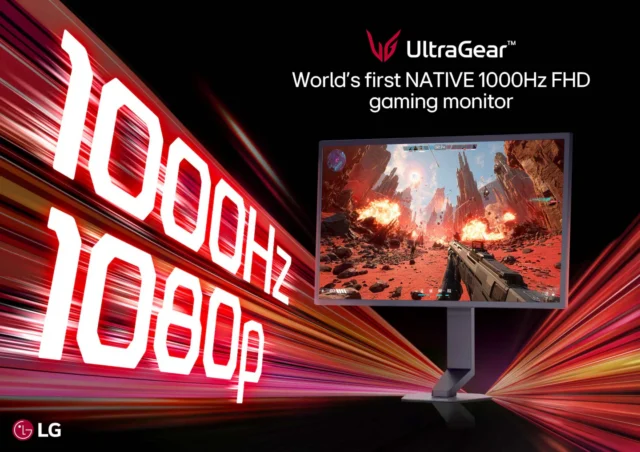
LG Electronics has just announced its entry into this exclusive market segment with the 24.5-inch UltraGear 25G590B, officially positioning it as the world's first native 1000 Hz Full HD gaming monitor. The South Korean electronics giant unveiled this technological achievement this week, with plans to roll out the display in select markets throughout the second half of the year. The "Full HD" designation is particularly significant, as it means LG's revolutionary 1000 Hz display maintains a 1080p resolution—the most commonly used gaming resolution according to continuous hardware surveys conducted by Valve's Steam platform.
This development marks a substantial progression from competing ultra-high refresh rate displays currently available from manufacturers like Acer and Samsung. Acer's Predator XB273U F6 and Samsung's competing offerings have pushed the boundaries of refresh rate technology, yet LG's announcement represents a new benchmark for what's technically achievable in gaming monitor design. The transition from Full HD to higher resolutions at ultra-high refresh rates presents ongoing engineering challenges that manufacturers continue to address through advanced display technologies and improved signal processing capabilities.
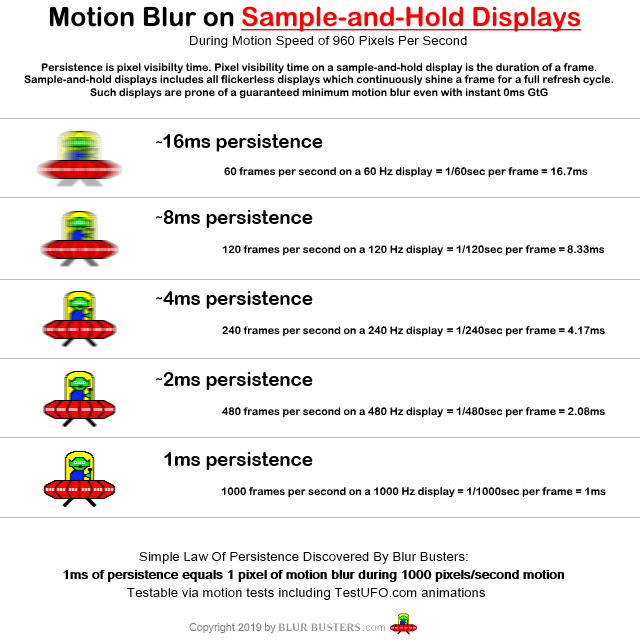
Understanding the practical implications of 1000 Hz refresh rates requires examining how display technology intersects with human perception and gaming performance. Each millisecond of reduction in display latency theoretically provides competitive players with marginally faster visual feedback. For esports professionals competing at the highest levels in fast-paced titles like Counter-Strike 2, Valorant, or Apex Legends, even fractional improvements in response time can influence split-second decision-making during intense matches. The accumulated advantage of reduced input lag across thousands of gaming sessions can theoretically translate into measurable performance improvements for dedicated competitive players.
The journey toward 1000 Hz displays reveals important context about how gaming technology evolves. Industry manufacturers have progressively pushed refresh rate capabilities over the past decade, with standard 60 Hz displays giving way to 144 Hz, then 240 Hz, and subsequently 360 Hz displays. Each technological advancement has been met with similar skepticism about whether the improvements justified the cost premium. However, competitive gaming communities have consistently embraced higher refresh rates, creating a market segment willing to invest in performance-oriented hardware. This pattern suggests that ultra-high refresh rate displays may eventually find their dedicated audience, much like previous generational leaps in monitor technology.
The practical benefits of high refresh rate gaming displays extend beyond pure technological specifications. Professional esports organizations, streaming content creators, and competitive gaming enthusiasts represent a specific market segment that prioritizes performance advantages. These users are willing to invest significantly in hardware that provides measurable competitive benefits, even when the improvements are subtle. The economics of the gaming monitor market have historically demonstrated strong demand from this performance-focused demographic, despite relatively high price points for cutting-edge technology.
Technical considerations regarding 1000 Hz gaming monitors involve multiple interconnected factors beyond simple refresh rate numbers. Display manufacturers must address pixel response times, input lag reduction, color accuracy, contrast ratios, and thermal management—all while maintaining the required 1000 Hz refresh capability. The engineering challenges increase substantially when manufacturers attempt to combine ultra-high refresh rates with higher resolutions, better color reproduction, or larger screen sizes. LG's focus on Full HD resolution represents a pragmatic approach, prioritizing maximum refresh rate capability while maintaining compatibility with the gaming community's most-used resolution.
GPU (graphics processing unit) capabilities represent another critical consideration in the practical adoption of 1000 Hz displays. Gaming systems must generate sufficient frames to actually utilize the 1000 Hz refresh rate effectively. Only the most powerful graphics cards from NVIDIA and AMD can consistently deliver the frame rates necessary to fill 1000 frames per second in demanding games. This technical requirement creates a natural market segmentation, as only enthusiast gamers with premium hardware can fully leverage the capabilities of ultra-high refresh rate monitors. This limitation ensures that 1000 Hz displays will remain a niche product for the foreseeable future, targeting only the most dedicated performance-oriented gaming audience.
The competitive landscape among gaming monitor manufacturers continues to intensify as companies race to claim technological leadership in the refresh rate arena. Each new announcement regarding higher refresh rates generates industry attention and establishes bragging rights within the gaming community. Acer, Samsung, and now LG are all investing significant research and development resources into pushing the boundaries of what's technically possible. This competition drives innovation in display panel technology, signal processing, and overall system design. However, it also raises legitimate questions about whether manufacturers are genuinely responding to consumer demand or creating artificial product differentiation through incremental technological improvements.
Market research data regarding gaming monitor preferences provides important context for evaluating the potential success of 1000 Hz displays. Steam's comprehensive hardware surveys indicate that the overwhelming majority of gamers use displays with refresh rates of 240 Hz or lower. Even 360 Hz monitors, which have been available for several years, remain a relatively small market segment. This data suggests that the addressable market for 1000 Hz displays may be even more limited than the existing ultra-high refresh rate segment. Manufacturers are essentially betting that professional esports players, content creators, and hardware enthusiasts will eventually adopt the technology, creating a sustainable niche market despite limited mainstream appeal.

The pricing strategy for 1000 Hz gaming monitors will significantly influence their market adoption and commercial viability. Early ultra-fast gaming displays typically command substantial premiums over conventional gaming monitors, sometimes costing two to three times more than standard 144 Hz or 240 Hz alternatives. If LG prices the UltraGear 25G590B similarly to competing ultra-high refresh rate displays, it will remain accessible only to affluent gaming enthusiasts willing to invest premium amounts for marginal performance improvements. Alternatively, aggressive pricing could expand the addressable market, though this approach conflicts with the current industry pricing trend for performance-focused gaming hardware.
The environmental and sustainability implications of continuously advancing display technology deserve consideration alongside performance specifications. Manufacturing increasingly powerful and feature-rich displays requires greater energy consumption during production and operation. The relatively short product replacement cycles in the gaming hardware market contribute to electronic waste concerns. As manufacturers push toward ever-higher specifications, the incremental improvements in gaming performance must be weighed against the environmental costs of producing and replacing these displays more frequently than previous generation hardware.
Professional esports organizations and competitive gaming teams represent the most likely early adopters of 1000 Hz gaming monitors. These organizations justify hardware investments by calculating return-on-investment through improved player performance and competitive success. A professional esports team competing for multimillion-dollar tournament prizes can rationally justify investing in every available performance advantage, regardless of cost. This professional segment provides manufacturers with a dedicated customer base and serves as a marketing channel to aspirational gamers who want equipment identical to their esports heroes.
Future developments in gaming monitor technology will likely continue following the established pattern of incremental refresh rate increases. Display manufacturers continue researching variable refresh rate technologies, adaptive sync standards, and advanced motion handling features that may eventually prove more impactful than raw refresh rate numbers. Gaming display innovations encompassing software-level optimizations, artificial intelligence-enhanced image processing, and improved input handling may ultimately provide greater practical benefits than simply increasing frame refresh cycles. However, the competitive pressure to announce higher specifications ensures that manufacturer announcements will continue celebrating ever-increasing refresh rates regardless of their practical gaming applications.
The arrival of 1000 Hz gaming monitors represents a fascinating moment in the ongoing evolution of gaming technology. While the practical benefits remain debatable for mainstream gamers, the engineering achievement is genuinely impressive and demonstrates the continued capability of manufacturers to push technological boundaries. Whether 1000 Hz displays eventually become standard equipment or remain an esoteric product for hardware enthusiasts will depend on pricing, GPU performance improvements, game optimization, and market demand dynamics that remain uncertain. For now, LG's announcement signals that the race toward even faster displays is far from concluded, and next-generation gaming displays will continue pursuing higher refresh rates regardless of whether consumers demonstrably need them.
Source: Ars Technica

.jpg&w=3840&q=75)
