
100+ Labour MPs Back Starmer in Leadership Battle

Over 100 Labour MPs sign statement supporting PM Keir Starmer as he faces calls to resign from more than 80 party colleagues demanding his departure.
In a significant show of parliamentary support, more than 100 Labour MPs have united behind Prime Minister Keir Starmer by signing a statement declaring that now is "no time for a leadership contest." This coordinated action comes as the party faces internal turmoil following demands from over 80 MPs calling for Starmer's immediate resignation. The statement represents a crucial moment in the ongoing political drama surrounding the Prime Minister's tenure and his grip on party unity during a turbulent period.
The letter, which was organized by backbench MPs rather than emerging directly from Number 10, has garnered signatures from 103 members of parliament including several parliamentary private secretaries. Despite claims from organizers that the statement originated independently from government offices, multiple MPs have reported that the letter was circulated through established government whips' networks. This dual narrative regarding the statement's origins highlights the complex dynamics within Labour's parliamentary party and the intricate mechanisms through which political pressure is managed at the highest levels.
During a formal cabinet meeting, Starmer made his position unequivocally clear to senior government figures, stating definitively that he would not step down from his position as long as no formal leadership contest had been officially triggered. This declaration represents a firm stance against what he views as backbench pressure and attempts to undermine his authority. The Prime Minister's unwavering commitment to remaining in post, conditional only on procedural formalities, demonstrates his determination to maintain control of the party apparatus and resist what many in government view as a coordinated mutiny.

The emergence of competing letters within the Labour parliamentary party reflects deeper ideological and strategic divisions that have been simmering beneath the surface for months. The supporters of the Prime Minister view the 100+ MP statement as compelling evidence that Starmer commands majority support among Labour's elected representatives, despite the vocal minority demanding his removal. This mathematical demonstration of backing becomes crucial in parliamentary politics, where the ability to command a working majority directly translates to political legitimacy and the capacity to govern effectively.
Those who have signed the statement supporting Starmer represent a diverse cross-section of the Labour party, including both established senior figures and newer members elected in recent parliamentary sessions. The geographical spread of signatories extends across multiple regions, indicating that support for the Prime Minister is not concentrated in any single area but rather dispersed throughout Labour's parliamentary representation. This breadth of support suggests that concerns about Starmer's leadership may be confined to specific factions rather than representing a widespread party-wide crisis.
The timing of the statement is particularly significant given the ongoing political and economic challenges facing the government. Labour strategists calculate that demonstrating strong parliamentary backing sends a crucial message to potential rebel MPs, to the media, and to the broader public about the stability of the government and the Prime Minister's ability to command his party. In the cutthroat world of Westminster politics, perception of strength and unity can be just as important as actual policy achievements in maintaining political authority.
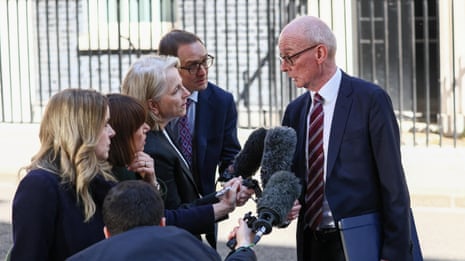
The faction calling for Starmer's resignation, numbering over 80 MPs, has cited various grievances ranging from policy disagreements to concerns about the direction of the government. These rebel MPs have employed traditional Westminster tactics to amplify their message, including coordinated media appearances, letters to senior party figures, and direct appeals to fellow MPs. However, the counter-mobilization represented by the 100+ MP statement suggests that the rebel faction, while vocal and organized, may lack the numerical strength to force a leadership change through conventional party mechanisms.
The role of government whips in circulating the supportive statement reveals how party machinery continues to function during moments of internal stress. Whips traditionally serve as both enforcers of party discipline and as indicators of the leadership's confidence. Their involvement in spreading the statement serves multiple purposes: it demonstrates institutional backing for the Prime Minister, it signals to wavering MPs the political costs of rebellion, and it provides an organizational structure through which support can be formally documented and counted.
Political analysts note that the conflicting parliamentary movements underscore the fragility of even majority governments when internal unity fractures. The Labour party leadership crisis has exposed fault lines that extend beyond simple personality politics, touching on fundamental questions about party direction, policy priorities, and the appropriate balance between backbench democracy and executive authority. These underlying tensions will likely persist regardless of whether Starmer successfully navigates the current challenge.
For Starmer personally, the statement from over 100 supportive MPs provides crucial political ammunition in his effort to resist pressure for resignation. By consistently pointing to these numbers, he can credibly claim that the vast majority of Labour MPs continue to support his leadership and vision for the party. This numerical advantage becomes particularly important as the Prime Minister faces media scrutiny and public speculation about the stability of his position and the government's ability to function effectively.
The broader implications of this parliamentary standoff extend beyond immediate questions of Starmer's tenure. The dispute raises important questions about how Labour as a party will manage internal disagreements, how much autonomy backbench MPs should have in challenging leadership, and what mechanisms should exist for resolving irreconcilable differences within the parliamentary party. These questions touch on fundamental principles of democratic governance within political organizations and will likely influence Labour's institutional evolution for years to come.
As the political drama continues to unfold, the Starmer leadership battle remains fluid, with both supporting and opposing factions mobilizing their resources and supporters. The formal procedural requirement that a leadership contest must actually be triggered before Starmer's commitment not to resign takes effect adds another layer of complexity to the situation. This technicality has become a key point of dispute, with different interpretations of party rules and procedures potentially determining whether the crisis escalates further or gradually subsides.
The statement signed by 103 Labour MPs represents a snapshot of parliamentary opinion at a particular moment in time, but political alignments can shift rapidly in response to new developments, media narratives, and behind-the-scenes negotiations. While the current numbers favor Starmer, the underlying tensions that have precipitated the crisis remain unresolved. The ultimate outcome will depend not only on the continuing count of supportive and rebel MPs but also on how effectively leadership navigates the procedural, political, and organizational challenges ahead.
Source: The Guardian


