
1,500+ Venezuelan Political Prisoners Seek Amnesty Relief

Venezuela's National Assembly announces major amnesty initiative as over 1,500 political prisoners apply for release amid mounting US diplomatic pressure.
In a significant development that could reshape Venezuela's political landscape, more than 1,500 Venezuelan political prisoners have formally submitted applications for amnesty through the country's National Assembly. This unprecedented wave of applications represents one of the largest coordinated efforts by detained political opposition members in recent Venezuelan history.
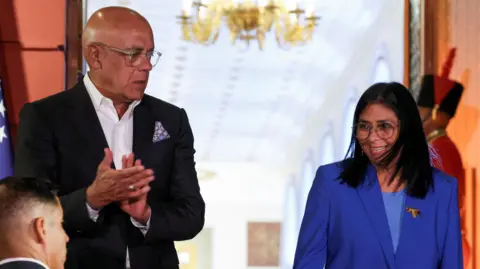
The announcement was made public by the head of Venezuela's National Assembly, marking a potential turning point in the country's approach to handling political dissidents. The timing of this initiative coincides with escalating international pressure, particularly from the United States, which has intensified its diplomatic efforts following recent political developments in the region.
The amnesty process comes at a critical juncture as Venezuela continues to grapple with ongoing political tensions and international scrutiny. Political prisoners in Venezuela have long been a contentious issue, with human rights organizations documenting cases of arbitrary detention and imprisonment of opposition figures, activists, and civil society leaders who have challenged the government's policies.
According to sources within the National Assembly, the amnesty applications cover a broad spectrum of cases, ranging from opposition politicians and student leaders to journalists and human rights activists who have been detained over the past several years. The comprehensive nature of these applications suggests a systematic approach to addressing the country's political prisoner crisis.
The international community has been closely monitoring Venezuela's treatment of political prisoners, with various organizations calling for their immediate release. The US pressure on Venezuela has intensified significantly, with American officials implementing targeted sanctions and diplomatic measures designed to encourage democratic reforms and respect for human rights.
Human rights advocates have welcomed the amnesty initiative while remaining cautiously optimistic about its implementation. The process requires careful evaluation of each case to ensure that those who have been unjustly detained can be released and reintegrated into Venezuelan society. This complex undertaking involves legal reviews, documentation verification, and coordination between various government departments.
The current political climate in Venezuela has been shaped by years of economic crisis, social unrest, and international isolation. The Venezuelan political crisis has resulted in millions of citizens fleeing the country, while those who remain often face restrictions on their civil liberties and political participation. The amnesty process could potentially serve as a bridge toward national reconciliation.
Legal experts familiar with Venezuelan law emphasize that the amnesty process must be conducted transparently and fairly to ensure its credibility both domestically and internationally. The National Assembly's handling of these applications will likely be scrutinized by international observers and human rights organizations who have been advocating for the release of political prisoners.
The families of political detainees have expressed mixed emotions about the amnesty opportunity, with many experiencing hope tempered by skepticism based on past experiences. Years of advocacy and legal battles have taken their toll on these families, who have often faced harassment and intimidation for their efforts to secure their loved ones' freedom.
International diplomatic efforts have played a crucial role in bringing attention to the plight of Venezuelan political prisoners. The European Union, Organization of American States, and various national governments have consistently called for the unconditional release of all political prisoners as a fundamental requirement for any meaningful democratic transition in Venezuela.
The technical aspects of processing over 1,500 amnesty applications present significant logistical challenges for Venezuelan authorities. Each case requires individual review, legal assessment, and coordination with detention facilities across the country. The scale of this undertaking reflects both the magnitude of the political prisoner issue and the potential for meaningful change.
Civil society organizations within Venezuela have been instrumental in documenting cases of political imprisonment and providing support to affected families. These groups have maintained detailed records of arrests, detention conditions, and legal proceedings, information that proves invaluable during the amnesty application process.
The economic implications of the political prisoner crisis extend beyond individual cases to affect Venezuela's broader international relations and economic recovery prospects. International investors and trading partners often consider human rights records when making decisions about economic engagement, making the resolution of this issue crucial for Venezuela's economic future.
Regional governments throughout Latin America have expressed varying degrees of support for the Venezuelan amnesty process, with some offering to facilitate dialogue and others maintaining more cautious positions. The regional response reflects the complex geopolitical dynamics surrounding Venezuela and the different approaches countries have taken toward the ongoing crisis.
The role of international humanitarian organizations in supporting both the amnesty process and the broader human rights situation in Venezuela cannot be understated. These organizations provide crucial documentation, advocacy, and support services that help ensure transparency and accountability throughout the process.
As the National Assembly moves forward with reviewing the amnesty applications, the international community continues to monitor developments closely. The success or failure of this initiative could significantly impact future diplomatic efforts and the trajectory of Venezuela's political evolution. The coming months will be critical in determining whether this amnesty process represents genuine progress toward addressing the country's human rights challenges or merely a symbolic gesture in response to international pressure.
Source: BBC News


